


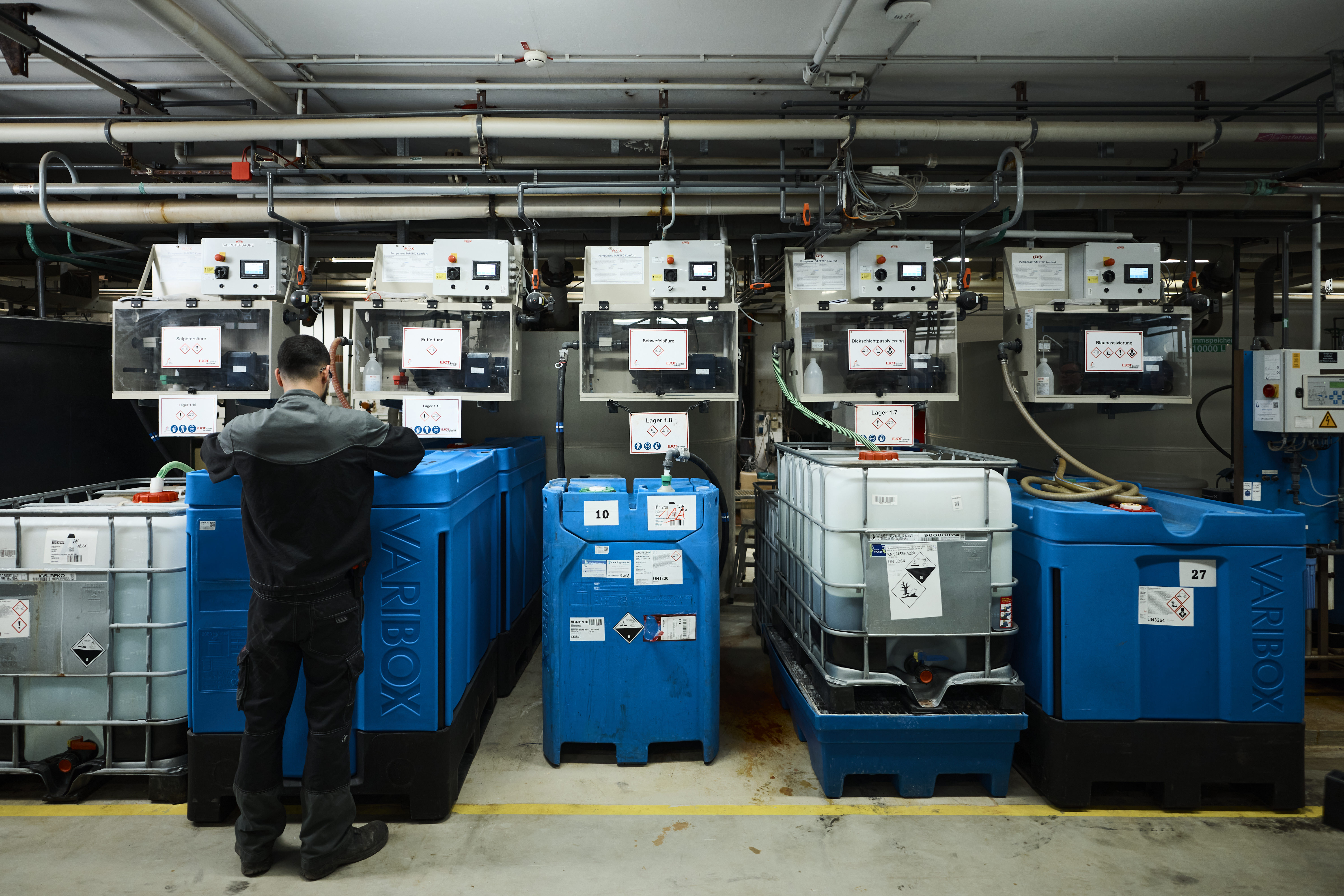






What Matters in Dosing and Measurement
Four factors that are crucial when selecting a dosing and measurement solution.

Measurement Principle
- Oval impeller (FMO) for high-viscosity fluids up to 500,000 mPas
- Wobble disc (FMC) for slightly contaminated media; can be mounted in any orientation
- Turbine impeller (FMT) for mobile small-volume measurement on JUNIORFLUX/COMBIFLUX

Accuracy & Legal Metrology
- ± 0.5% repeatability in calibrated FMC/FMO-FLUXTRONIC® systems
- Calibration-accurate weighing technology (FPackV-compliant) with FLUX FILL GT
- MID 2014/32/EU and the German Measurement Act (MessEG) for sales filling subject to calibration requirements

Media Compatibility
- Materials: PP, ETFE, PVDF, stainless steel, and aluminum, depending on the medium
- Fluid temperatures up to 120 °C (FMO), operating pressures up to 200 bar
- Explosion protection for flammable media (FMC, FMO S/S: II 2G Ex h IIB T4 Gb)

Integration & Control
- FLUXTRONIC® with manual and automatic (batch) modes at the push of a button
- Signal outputs to valves, actuator motors, or PLC
- Non-volatile memory, 4 PIN-protected security levels, wall mounting
Dosing Systems Comparison
Key performance indicators and features at a glance – for selection and comparison.
| FEATURE | MANUAL SYSTEMS | SEMI-AUTOMATIC SYSTEMS | FLUX-FILL GT | SAFETEC |
|---|---|---|---|---|
 |
 |
 |
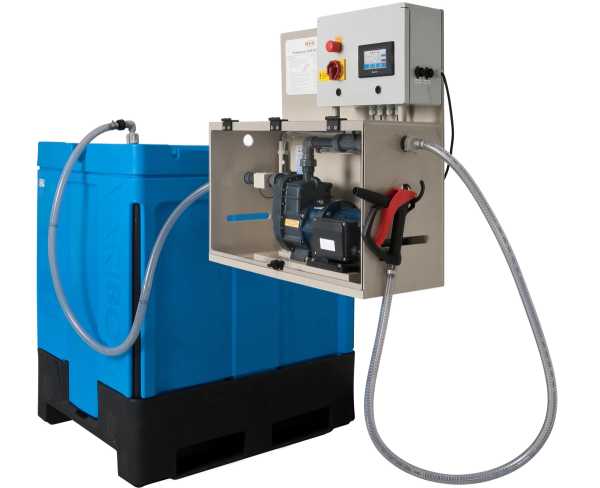 |
|
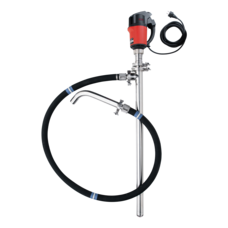
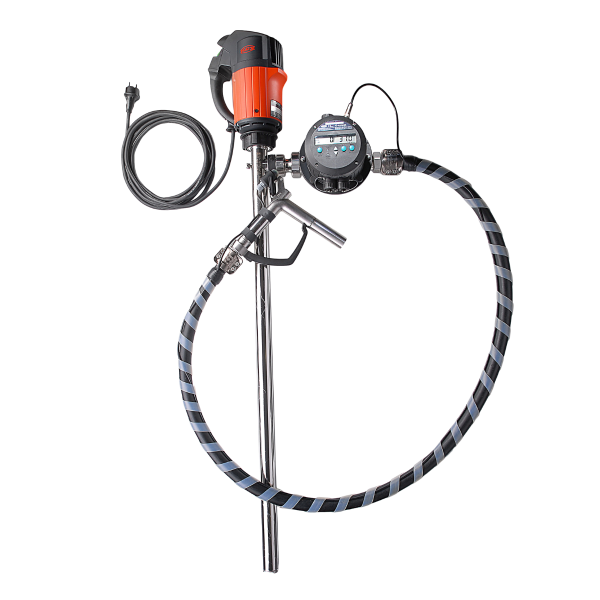
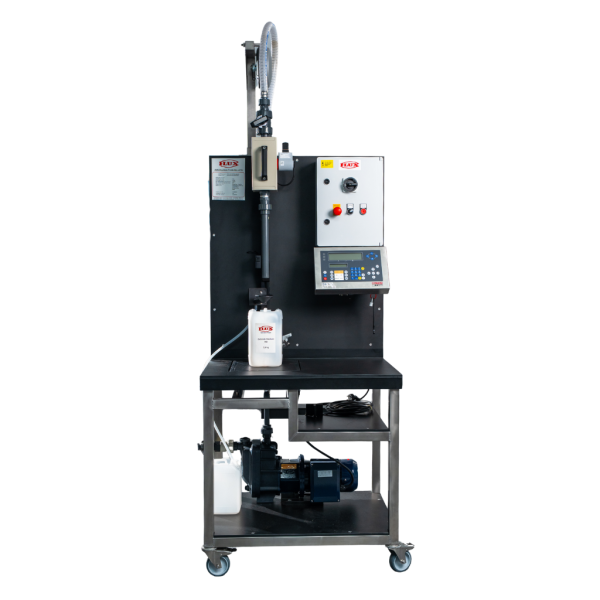
| Dosing Method | Manual (dispensing nozzle) | Flow measurement | Weighing technology (FPackV) | Flow measurement |
| Automatic Stop | – | ✓ | ✓ | ✓ |
| Media Range | Universal, up to 30,000 mPas | Low to high viscosity | Low-viscosity, foaming, aggressive chemicals | Low-viscosity, aggressive chemicals |
| Container Types | Drums, IBCs | Drums, IBCs | All types of containers due to self-priming pump | All types of containers due to self-priming pump |
| Explosion Protection (ATEX) | ✓ (depending on configuration) | ✓ (depending on configuration) | – | – |
| Food Compliance | ✓ (depending on configuration) | ✓ (depending on configuration) | ✓ (optional) | – |
| Legal-for-Trade Accuracy (FPackV) | – | – | ✓ | – |
| Closed System | – | – | ✓ | ✓ |
| Ideal For | Simple manual filling operations | Simple semi-automatic filling, small batches | Filling sales containers in accordance with FPackV; also suitable for larger batches | Batch dosing processes; increased safety when handling aggressive media |
| View Product | View Product | View Product | View Product |

Case Studies
Case Studies: How customers use FLUX systems for dosing and measurement in real-world applications.
Precise Dosing of Oils from IBCs
FMO 110, FLUXTRONIC®, FSV 100 – precise dosing in oil filling.
Refueling Vehicles with Specialty Fuels
FMC 100, FLUXTRONIC®, FP 425 Ex, F 460 Ex – Flow measurement in hazardous areas.
Precision Filling of Gasoline & Fuels
FMC 100 Ex, FLUXTRONIC®, F 430 Ex S – Ex-rated versions for flammable media.
Dosage of Disinfectants (Legionella)
FMO 102, FLUXTRONIC®, Pulse Amplifier – precise dosing in the water circuit.
Dosing & Measurement in Various Industries
Dosing and measurement tasks vary depending on compliance requirements, the range of media, and the type of process—the industry determines the measurement principle.

Chemistry
Acids, alkalis, and corrosive media metered from IBCs and drums – FMO and FMC with PVDF/ETFE housings, FLUXTRONIC® for batch operation.

Food & Beverages
Precise portioning and filling of liquids and syrups—FDA/FOOD-compliant models, FLUX FILL GT for sale containers subject to calibration requirements.

Pharmacy
FDA-compliant small-batch filling—APIs, suspensions, creams.

Cosmetics
Precise dosing for small batches – FMO in stainless steel, FLUXTRONIC® with PIN-protected security levels.
Frequently Asked Questions About Filling
The FLUXTRONIC® control system with an FMC or FMO flow meter typically achieves a repeatability of ±0.5% when the system is calibrated. The actual accuracy depends on the medium, viscosity, flow rate, and switch amplifier configuration. For more stringent requirements (filling subject to calibration), the FLUX FILL GT with weighing technology compliant with FPackV is recommended.
Calibrated weighing technology in accordance with the Prepackaged Goods Regulation (FPackV) is required when the filled quantity is labeled for sale—that is, for prepackaged goods intended for the end consumer. The FLUX FILL GT operates using the overfill method with a calibration-accurate load cell and is designed for small and medium-sized batches.
Explosion-proof filling involves three levels: an ATEX-certified pump (materials, bearings, coupling), an ATEX-certified motor (compressed air or explosion-proof electric motor), and a grounding concept that includes antistatic hoses and equipotential bonding between the source and target containers. The zone classification (Zone 0/1/2) is determined by the system and dictates the selection of components.
Yes. Manual pump sets can be retrofitted with a flow meter (FMC or FMO), a switching amplifier, and a FLUXTRONIC® controller. The pump and motor are generally retained—only the outlet fitting is replaced with the FLUX filling unit (FAE).
The SAFETEC pump set is designed for sealed hazardous-material containers with CDS or QC couplings. It empties the containers while they remain sealed via an immersion tube—without spilling a drop and without personnel coming into contact with the contents. The self-priming MAGSON magnetic centrifugal pump operates with a hermetically sealed design.
Get in touch.
Find documents.

Sales & Advice
Select a pump suitable for the application
We determine the medium, flow rate, viscosity and operating environment.

Requests for quotations
Please send us your requirements
We will assess your requirements and advise you on the most suitable option.

Service & Support
Documents for planning, operation and servicing
Find user manuals, dimension sheets, technical specifications and FAQs.