







Peristaltic Pumps
Peristaltic pumps are used wherever abrasive, viscous, or solids-laden fluids need to be pumped gently and reliably.
FLUX peristaltic pumps are self-priming positive-displacement pumps with flow rates up to 300 m³/h and pressures up to 10 bar. They require minimal maintenance, and the tubing can be replaced in just a few minutes without special tools.
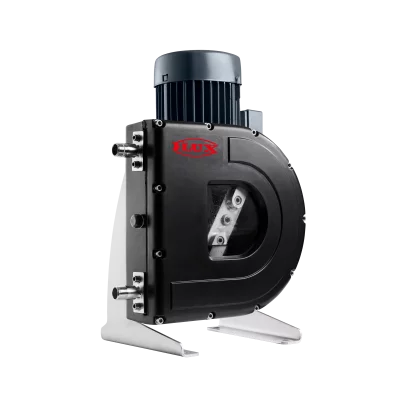
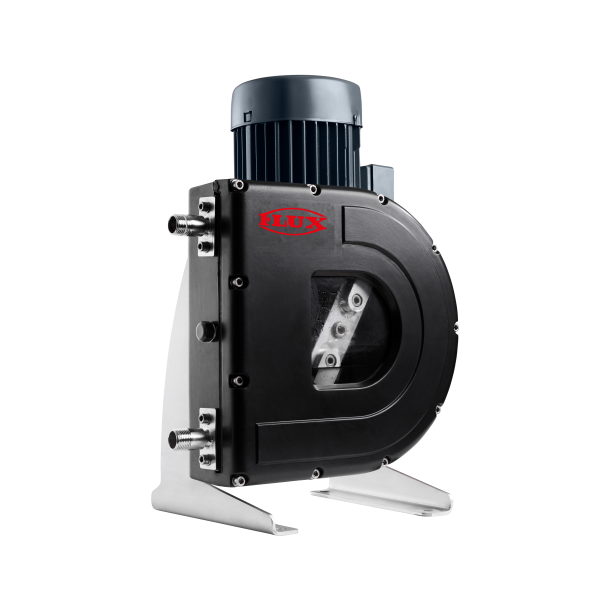
FHP-10, FHP-15
For low flow rates up to 330 l/h. Compact peristaltic pumps for dosing and transfer applications with discharge pressures up to 5 bar.
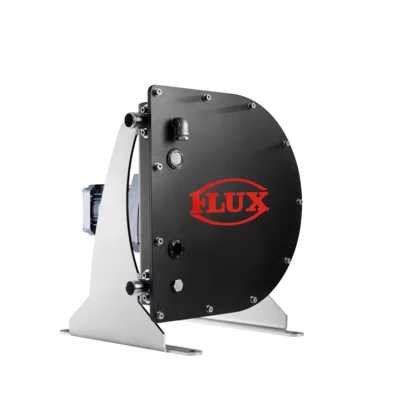
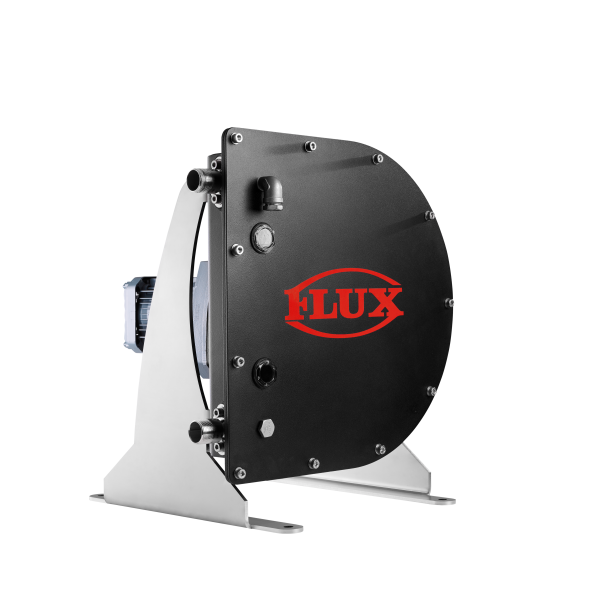
FHP-25, FHP 32, FHP-40, FHP-50
For medium flow rates up to 5,600 l/h. Robust design for viscous media and applications involving solids.
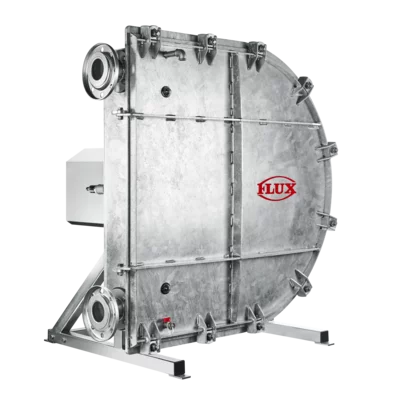
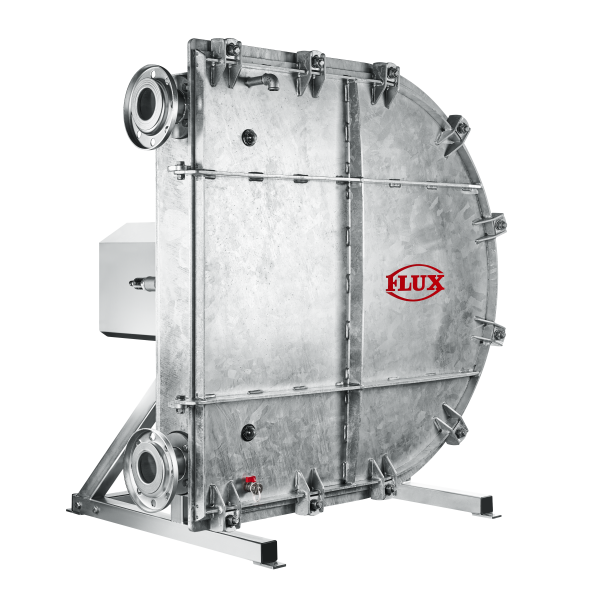
FHP-65, FHP-80, FHP-100, FHP-150 and FHP-200
For high flow rates and demanding process applications. Suitable for abrasive, shear-sensitive and solids-laden media.


Advantages

Self-priming and protected against dry running
No need to fill before starting—PERIPOWER draws in fluid automatically and runs safely even when dry.

Effortlessly Convey Solids
Particles up to 40% of the hose's inner diameter—including long-fiber and abrasive materials.

Tire Change in Minutes
The pump's only wear part—can be replaced without special tools or technical personnel.

Constant flow rate
Up to 300 m³/h – flow rate independent of viscosity and solids content, precisely controllable via a variable-frequency drive.
Applications
Typical applications and areas of use for FLUX peristaltic pumps.
Wastewater and Sewage Treatment Works
Pumping wastewater and leachate—self-priming, solids-tolerant, dry-run-safe.
Agriculture and Biogas
Slurry, feed, and fermentation residues—even with high dry matter content (up to 25%) and high solids content.
Mining and Civil Engineering
Drilling mud, oil sludge, and abrasive suspensions—high wear resistance thanks to NRH hoses.
Food Processing
Food scraps and slaughterhouse waste—gentle conveyance; FDA-compliant hoses available.
Chemical Industry
Aggressive and high-viscosity fluids up to 20,000 mPas – EPDM hoses for concentrated acids and alkalis.
Oil and Gas Industry
Oil sludge, used oil, and cooling lubricants – cutting oil extraction, suitable for onshore and offshore use.


Media Examples
Peristaltic pumps are particularly well-suited for pumping solids.
Peristaltic pumps are ideal for pumping media with a high solids content. Whether abrasive, long-fiber, or highly viscous materials—our pumps can handle any challenge.
- Wastewater
- Agricultural products
- Seed treatment agents for seed production
- Drilling mud
- Animal feed
- Manure
- Hygiene products
- Food scraps
- Oil sludge and used oil
- Leachate (water)
- Residual products
- Slaughterhouse waste
- Cutting oil


Peristaltic Pumps Compared
The key performance data and features at a glance—for selection and comparison.
| Models | FHP-10, FHP-15 | FHP-25, FHP-32, FHP-40, FHP-50 | FHP-65, FHP-80, FHP-100, FHP-150, FHP-200 |
|---|---|---|---|
 |
 |
 |
|
|
For low flow rates up to 330 l/h. Compact peristaltic pumps for dosing and transfer applications with discharge pressures up to 5 bar. Key data:
|
For medium flow rates up to 5,600 l/h. Robust design for viscous media and applications involving solids. Key data:
|
For high flow rates and demanding process applications. Suitable for abrasive, shear-sensitive and solids-laden media. Key data:
|
|
| Request an offer | Request an offer | Request an offer |
Product Groups in Detail (Selection)
The key performance data and features of selected peristaltic pumps at a glance. View all products (Technical Data, Performance Curves, Dimensions)
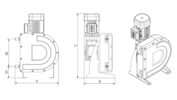
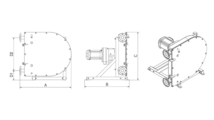
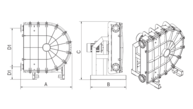
| MODEL | FHP-10 | FHP-15 | FHP-40 | FHP-50 | FHP-65 | FHP-80 | FHP-100 | FHP-125 | FHP-150 | FHP-200 |
|---|---|---|---|---|---|---|---|---|---|---|
 |
 |
 |
||||||||
| Flow rate | 150 l/h | 330 l/h | 3,000 l/h | 5,600 l/h | 12 m³/h | 20 m³/h | 40 m³/h at 5 bar | 60 m³/h at 26 rpm | 120 m³/h at 26 rpm | 300 m³/h at 26 rpm |
| Rated speed | 50 rpm | 50 rpm | 26 rpm | 26 rpm | 26 rpm | 26 rpm | 26 rpm | 26 rpm | 26 rpm | 26 rpm |
| Operating pressure | 5 bar | 5 bar | 5 bar | 5 bar | 5 bar | 5 bar | 5 or 10 bar | 5 or 10 bar | 5 or 10 bar | 5 or 10 bar |
| Motor power | 0.37 kW | 0.37 kW | 1.1 kW | 1.5 kW | 2.2 kW | 4.0 kW | 7.5 or 15 kW | 11 or 22 kW | 15, 18 or 37 kW | 37, 45 or 90 kW |
| Hose diameter | 10 mm | 15 mm | 40 mm | 50 mm | 65 mm | 80 mm | 100 mm | 125 mm | 150 mm | 200 mm |
| Volume per revolution | 0.05 l/rev | 0.11 l/rev | 1.9 l/rev | 3.6 l/rev | 7.7 l/rev | 12.8 l/rev | 25 l/rev | 38 l/rev | 76.92 l/rev | 192.31 l/rev |
| Connection | 1/4" male thread | 1/2" male thread | 1½" male thread or DN 40 flange | 2" male thread or DN 50 flange | 2½" male thread or DN 65 flange | 3" male thread or DN 80 flange | 4" male thread or DN 100 flange | 5" male thread or DN 125 flange | 6" male thread or DN 150 flange | 8" male thread or DN 200 flange |
| Housing material | PU | Carbon steel or stainless steel | Carbon steel or stainless steel | |||||||
| Hose materials | NRH, EPDM, NBR, FDA-grade EPDM, FDA-grade NBR | NRH, EPDM, NBR, FDA-grade EPDM, FDA-grade NBR | NRH, EPDM, NBR, FDA-grade EPDM, FDA-grade NBR | |||||||
| Weight | Approx. 25 kg | Approx. 25 kg | Approx. 140 kg | Approx. 180 kg | Approx. 265 kg | Approx. 500 kg | Approx. 700 kg | Approx. 1,300 kg | Approx. 1,800 kg | From 4,500 kg |
Pump Technology and Accessories
Materials, hose materials and accessory components can be matched precisely to the medium, process and operating environment. This increases operational reliability, improves conveying accuracy and supports higher system availability.
| MATERIAL | RESISTANCE | TYPICAL MEDIA |
|---|---|---|
| NRH (natural rubber) | Very high abrasion resistance. Resistant to diluted acids, alkalis and alcohols. | Slurry, drilling mud and media containing solids |
| NBR (Buna-N) | Very high resistance to oils, greases and alkalis. Good mechanical properties. | Waste oil, heavy fuel oil and olive oil |
| EPDM | Good resistance to chemicals, concentrated acids and alkalis. | Vinegar, sulphuric acid (50%), potassium hydroxide, cleaning agents, citric acid and sodium hydroxide |
| MATERIAL | RECOMMENDED APPLICATION |
|---|---|
| Polyurethane | Standard housing for FHP-10 and FHP-15. High wear resistance and a good price-performance ratio. |
| Carbon steel | Powder-coated standard housing for FHP-25 to FHP-50. Galvanised steel housing as standard from FHP-65. Suitable for higher mechanical loads and industrial applications. |
| Stainless steel | Available as an option from FHP-25. Suitable for hygienically sensitive areas and chemically aggressive environments. |
| ACCESSORY | FUNCTION | AVAILABLE FROM |
|---|---|---|
| Pulsation dampener | Evens out the flow, reduces pressure peaks and improves dosing accuracy. | All pump sizes |
| Hose rupture sensor | Detects hose damage and shuts down the pump. This increases system safety and prevents product leakage. | FHP-25 |
| Variable frequency drive | Provides precise speed and flow control for flexible adjustment to operating conditions. | All pump sizes |
| Control unit | Enables direct pump control and supports efficient operating processes. | All pump sizes |
| Vacuum pump | Creates a vacuum inside the housing and increases suction lift from 5 to 9 mWC. | FHP-100 |
| Higher motor power | Uses a reinforced gearbox and increases the maximum discharge pressure to 10 bar. | FHP-100 |
Get in touch.
Find documents.

Sales & Advice
Select a pump suitable for the application
We determine the medium, flow rate, viscosity and operating environment.

Requests for quotations
Please send us your requirements
We will assess your requirements and advise you on the most suitable option.

Service & Support
Documents for planning, operation and servicing
Find user manuals, dimension sheets, technical specifications and FAQs.