Gently Conveying Paste-Like Tomato Paste for Organic Food Production

Mobile drum-emptying system replaces shovels

Healthy foods are important for well-being, but not everyone has the time or the means to cook fresh meals or source the necessary ingredients. This is where ready-to-eat meals — such as vegetable dishes and spreads—come in handy; they’re made using tried-and-true recipes with organic ingredients. Vegetarian and vegan foods can also be produced gently, just like at home. Well-designed workflows and modern technology—such as a drum-emptying system for paste-like tomato concentrate—ensure healthy, delicious products of consistent quality.

Organic-quality ingredients form the basis for a wide range of vegetarian and vegan products at Zwergenwiese Naturkost GmbH, based in Silberstedt, northern Germany. While the first spread was still made on the kitchen stove at home over 45 years ago, today more than 150 employees prepare over 100 different products, including spreads, mustard specialties, tomato sauces, ketchup, fruit spreads, salad dressings, and delicious vegetable dishes—all organic. To achieve this, raw materials are primarily sourced from local suppliers whom the company knows personally and are processed directly on-site. The tomato paste comes from a long-standing partner company in Italy. To ensure a consistent supply of the full range of products, all stages of production must be well coordinated. Precisely measuring out the tomato paste mixture posed a particular challenge.

Author: Zwergenwiese
Tomato paste, the "rich" flavor enhancer

With their natural content of savory compounds (umami flavor), tomatoes are an important ingredient in many vegetable dishes, spreads, and sauces. Since only fully ripe tomatoes develop a full-bodied aroma, the best tomato base available year-round for consistent flavor is a gently prepared organic tomato paste. The drawback is obvious: double-concentrated tomato paste is too thick to pour; until now, it had to be scooped out of the delivery barrel by hand and added to the recipe mixture. Even lifting the scoop was no easy task, and retrieving the paste from the bottom of the tall 200-liter barrel was very difficult. To make dispensing tomato paste easier and faster, the Silberstedt team now relies on the VISCOFLUX mobile S barrel-emptying system from FLUX-Geräte GmbH. This standalone system is customized to the user’s needs and consists of a process unit with a chassis, as well as a pump unit featuring a motor, an eccentric screw pump, and a discharge plate with a process seal. The pump unit is individually designed for each specific application. Thanks to the steerable rear wheels on the chassis, the unit can be easily maneuvered to the drum and allows for the emptying of four drums stacked on a pallet—a significant advantage for the user, who empties up to 9 drums of tomato paste every day.

Conveying Raw Materials Gently

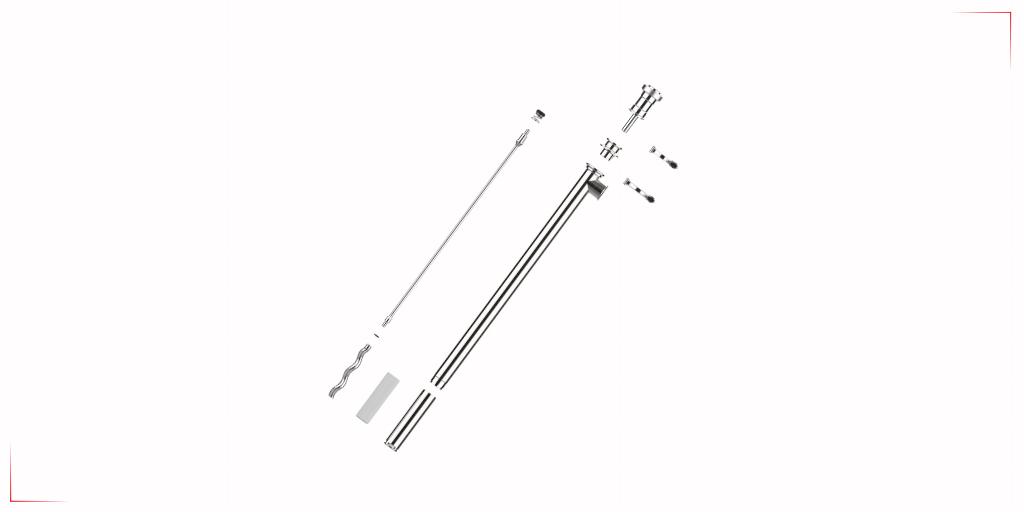
To convey the tomato paste that has stopped flowing from the barrel with a plastic liner, the system uses an eccentric screw pump, whose eccentric design allows even highly viscous media to be conveyed gently. Together with the 3 kW three-phase motor mounted on top, this allows for a flow rate of up to 70 l/min at a back pressure of up to 8 bar. This is sufficient to press the paste even through longer dosing hoses. A variable-frequency drive ensures the necessary precise flow control. If necessary, the pump can also be controlled via external signals, such as those from a flow meter or a scale. During operation, the pump unit is lowered via a battery-powered lifting arm until the follow-up plate rests on the medium, at which point the pump is started.

A challenge with viscous media such as tomato paste, as well as fruit puree, caramel syrup, peanut butter, or non-food media such as lubricating greases, creams, waxes, or casting compounds, is ensuring that the self-priming pump always receives enough “inlet medium.” This is handled by the attached follow-up plate with a molded gasket. The gasket hermetically seals the contents from the ambient air and also accommodates minor transport dents or creases in the liner. In contrast to conventional emptying systems, in which the follow-up plate pressurizes the contents, this drum emptying system operates solely through the vacuum generated by the pump during emptying—or, more precisely, through the air pressure that moves the plate. This is particularly gentle on the product. This enables reproducible emptying with less than 1% residual content. The airtight follow-up plate can be sealed with a plug after the pump riser tube is removed, allowing even partially emptied drums to be returned to refrigeration or storage under hygienically sound conditions. Once the drum is completely emptied, the lid is raised again using compressed air; the internal pressure simultaneously secures the liner bags to the drum wall.

Easy to Use and Clean

The barrel-emptying system is made of stainless steel and designed for use in hygienic environments. Thorsten Ponath, Production Manager at Zwergenwiese, comments: “The entire system is very well thought out; all parts of the pump that come into contact with the product can be easily disassembled by hand for thorough cleaning. This means the pump is quickly ready for use again. The pump’s robust construction and high reliability make it a dependable asset in production.” Since hygiene and compliance with bio-standards are of the utmost importance during manufacturing, the tight-fitting end cap also protects against contamination during production, such as traces of allergens. The manufacturer therefore omits the label “may contain traces of xy” wherever product specifications allow and guarantees the absence of traces, supported by the implemented allergen management system. The tight-fitting secondary lid facilitates production by providing an additional safety measure against trace carryover. This, combined with the enormous reduction in labor compared to the old scoop-filling method, enables rapid production. “The mobile design of the drum emptying system is ideal for us. It allows us to move the drum pallets individually back and forth between our three production lines,” Ponath continues. “With the VISCOFLUX mobile S, we’ll continue to meet the steadily growing demand for high-quality organic finished products well into the future.”

For more than 70 years, the name FLUX

has stood for pump technology and guaranteed smooth processes, even with demanding fluids. It all began in 1950 with the invention of the first electric drum pump. Today, the manufacturer offers an extensive product lineup consisting of individual components, preconfigured sets, and system solutions. Production takes place exclusively in Germany, at the main facility in Maulbronn. In addition to excellent product quality, safety, and reliability, users appreciate the employees’ outstanding technical expertise and strong customer focus. FLUX pumps are used, for example, in the chemical, pharmaceutical, and cosmetics industries; in mechanical and plant engineering; as well as in companies specializing in surface technology, wastewater treatment, and the food industry, and in hazardous areas. FLUX-GERÄTE GMBH supplies pumps to nearly 100 countries.

About Zwergenwiese

Zwergenwiese’s first spread was created over 45 years ago. Today, many hardworking hands—from a team that has now grown to more than 150 employees in Silberstedt, Schleswig-Holstein—produce a total of more than 100 different varieties of spreads, mustard specialties, tomato sauces, fruit spreads, salad dressings, and delicious vegetable dishes. Of course, everything is organic.

Get in touch.
Find documents.

Sales & Advice

Select a pump suitable for the application
We determine the medium, flow rate, viscosity and operating environment.

Requests for quotations

Please send us your requirements
We will assess your requirements and advise you on the most suitable option.

Service & Support

Documents for planning, operation and servicing
Find user manuals, dimension sheets, technical specifications and FAQs.